If your smartphone has a cracked screen, weak battery, charging problem, damaged camera, water…
Read More

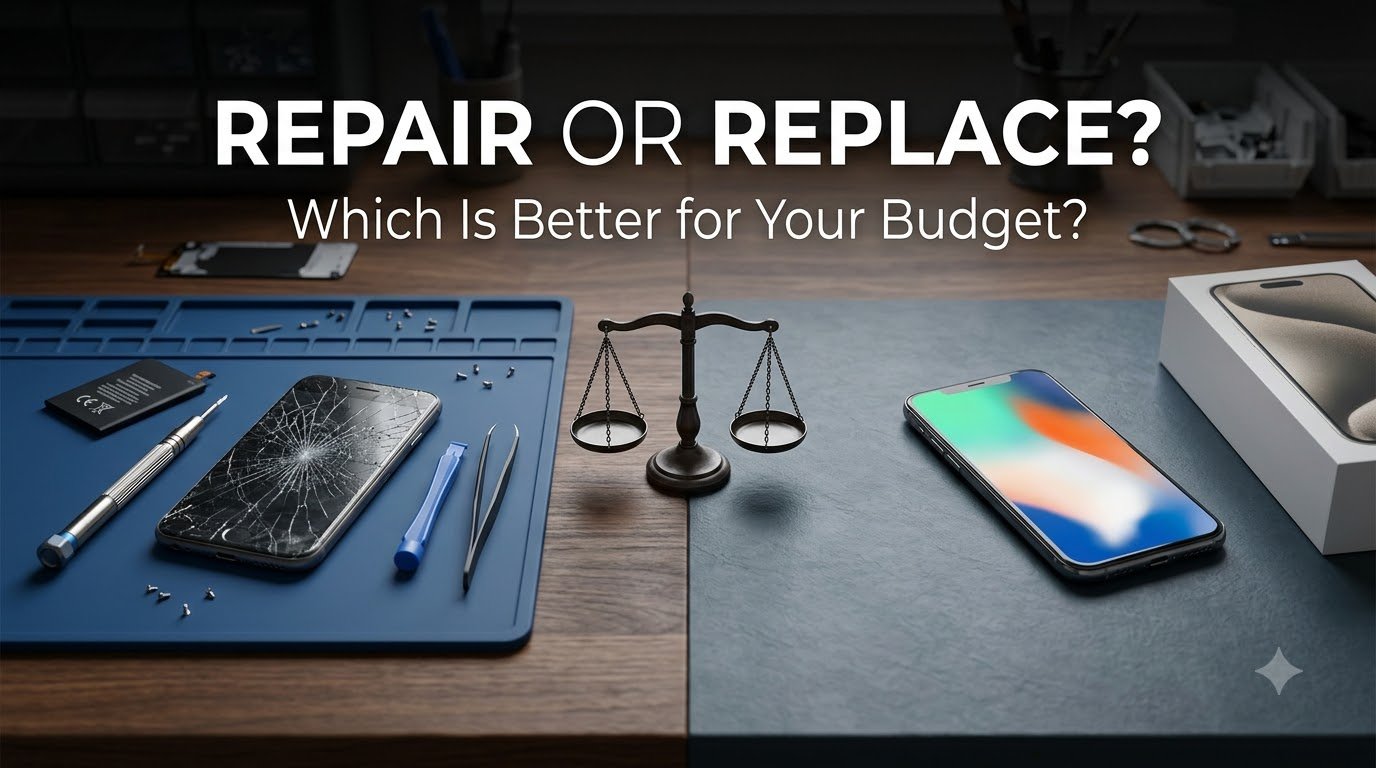
A smartphone is an essential part of everyday life, helping us communicate, work, study, manage finances, and stay connected. However, as a phone gets older, problems such as a cracked screen, weak battery, charging issues, or slow performance can make it difficult to use. This often leads to an important question: Is it worth repairing an old phone or buying a new one?
The answer depends on several factors, including the phone’s age, overall condition, repair cost, software support, and how well it meets your daily needs. In many cases, a simple repair can restore a phone’s usability at a lower cost than purchasing another device. In other situations, replacing an outdated or extensively damaged smartphone may be the more practical decision.
Before spending money, it is worth comparing both options carefully. Understanding the benefits and limitations of phone repair versus replacement can help you make a cost-effective decision without paying for unnecessary repairs or buying a new device before you really need one.
When Is Repairing an Old Phone Worth It?
Repairing an old smartphone can be a sensible choice when the problem is limited to one component and the rest of the device works reliably. If your phone still performs everyday tasks, runs the applications you need, and receives essential security updates, a targeted repair may extend its useful life.
Here are some common situations in which repair makes sense.
1. Your Phone Has a Cracked Screen
A cracked display does not necessarily mean your smartphone needs replacing. If the device still works properly and the damage is limited to the screen, professional phone screen repair may restore its appearance and usability.
However, you should address cracks that affect touch sensitivity, expose internal components, or create sharp edges. Delaying repairs can make the device less convenient and may increase the risk of further damage.
2. The Battery Does Not Last Long
Battery performance naturally declines with repeated charging and everyday use. If your phone loses charge quickly, shuts down unexpectedly, or requires frequent charging, an old phone battery replacement may solve the problem.
When the battery is the main issue, replacing it can be more economical than buying an entirely new smartphone. This is particularly true when the phone’s processor, display, camera, and other components remain in good condition.
3. Your Phone Has Charging or Audio Problems
Charging port faults, damaged cables, malfunctioning speakers, and faulty buttons can interfere with everyday use. Some of these problems can be resolved without replacing the entire device.
A professional diagnosis is important because similar symptoms can have different causes. For example, charging problems may result from a damaged port, a faulty cable, battery deterioration, or an internal hardware issue.
4. The Phone Still Meets Your Needs
If your smartphone handles calls, messages, browsing, video streaming, and essential applications comfortably, there may be little reason to replace it simply because a newer model is available.
Repair is generally worth considering when the cost is reasonable, the phone remains secure and functional, and you expect to use it for a meaningful amount of additional time.
When Should You Consider Buying a New Phone?
Repair is not always the best solution. An older smartphone may have several underlying problems that make continued ownership expensive or inconvenient.
1. The Repair Cost Is Too High
A damaged motherboard, extensive liquid damage, or multiple failing components can lead to expensive repairs. If the estimated cost approaches the price of a suitable replacement phone, purchasing another device may provide better value.
Compare the repair bill with the cost of a replacement that offers the features you actually need. Do not compare an expensive repair with the price of a premium flagship if an affordable phone would meet your requirements.
2. Your Phone No Longer Receives Security Updates
Software support is an important consideration when deciding when to replace an old smartphone. Security updates help address vulnerabilities that could expose personal information or compromise device security.
If your phone no longer receives important security patches and the manufacturer does not provide a supported upgrade path, replacement may be sensible, especially if you use the device for banking, work, or sensitive accounts.
3. Performance Is Consistently Poor
A phone that frequently freezes, crashes, overheats, or struggles to run essential applications may have problems beyond a worn battery.
Some performance issues can be improved by freeing storage, updating software, or replacing a faulty component. However, if the device remains slow after reasonable troubleshooting, its hardware or software limitations may make replacement more practical.
4. You Experience Repeated Hardware Failures
If you have already paid for several repairs and new problems keep appearing, the total cost can become difficult to justify. A replacement may offer greater reliability and reduce the inconvenience of repeated visits to a repair provider.
Phone Repair vs Replacement: A Cost Comparison
The cost of repairing an old phone varies according to its brand, model, component availability, damage severity, and the quality of replacement parts. Therefore, it is better to obtain a model-specific estimate than rely on a universal price.
The following table explains how to compare common repair options with replacement.
| Option | When it may make sense | What to consider |
|---|---|---|
| Screen repair | The display is damaged, but the phone otherwise works well | Screen quality, touch response, and total repair cost |
| Battery replacement | Battery life has declined significantly | Battery quality and the phone’s remaining software support |
| Charging port repair | Charging is unreliable because of a faulty port | Whether the fault is actually in the port, battery, or charging circuitry |
| Speaker or button repair | A specific component has stopped working | Whether other hardware problems are present |
| Buying a replacement phone | The device is outdated, extensively damaged, or expensive to repair | Purchase price, useful features, software support, and expected lifespan |
How to Calculate Which Option Offers Better Value
Consider a hypothetical example in which repairing your current phone costs ₹4,000, while a suitable replacement costs ₹15,000. If the repair restores reliable performance and allows you to use the device for another year or two, repairing it could be the more economical choice.
However, if the phone also has serious motherboard damage, limited storage, and no security updates, spending ₹4,000 may only postpone the need to buy another device.
To make a fair comparison, consider:
- Immediate cost: What will you pay for the repair or replacement?
- Expected remaining lifespan: How long can you reasonably expect to use the repaired device?
- Future expenses: Are other components likely to need attention?
- Replacement benefits: Would a new phone meaningfully improve battery life, performance, storage, or security?
The cheapest immediate option is not always the best long-term investment. Choose the option that provides reliable use at a reasonable overall cost.
Five Factors to Consider Before Making a Decision
Before choosing between repair and replacement, assess these five factors.
1. Age and Overall Condition
A phone’s age provides useful context, but it should not determine your decision on its own. A well-maintained four-year-old device may be more suitable for repair than a newer phone with extensive liquid damage.
Consider the condition of the display, battery, charging system, cameras, and internal hardware. One isolated fault is generally easier to justify repairing than several unrelated failures.
2. Total Repair Cost Compared With Replacement Cost
Get a clear estimate before approving the work. Ask whether the quoted amount includes parts, labour, and any additional charges that may apply.
As a practical guideline, compare the repair cost with the price of a replacement that meets your needs. If the repair is a relatively small expense and restores dependable use, it may be worthwhile. If it consumes a large proportion of the replacement budget without addressing other limitations, buying a new phone deserves serious consideration.
3. Battery Health and Everyday Performance
Think about how your phone performs throughout the day. Does the battery last long enough? Are applications responsive? Can you make calls, take photographs, and use essential services without frequent interruptions?
If poor battery life is the main inconvenience, battery replacement may be enough. If battery problems occur alongside severe lag, frequent crashes, and hardware faults, the decision requires a broader assessment.
4. Operating System and Security Support
Check whether the manufacturer still provides operating system upgrades and security patches for your particular model.
A physically repaired phone is not automatically a secure or fully supported phone. If the device has reached the end of its supported life, this should be part of your decision, particularly if you depend on it for professional or financial activities.
5. Budget and Future Requirements
Your personal requirements matter as much as the technical condition of your phone. A student who primarily uses messaging, browsing, and educational applications may be perfectly comfortable with a repaired device.
A professional who needs reliable video calls, advanced photography, more storage, or demanding applications may benefit more from an upgrade.
Think about your expected usage over the next year or two, not just the inconvenience you are experiencing today.
Is Replacing the Battery or Screen Enough to Extend a Phone’s Life?
Yes, replacing a damaged or worn component can extend a smartphone’s useful life when the rest of the device remains in good condition.
A battery replacement can improve everyday battery life and reduce interruptions caused by frequent charging. A screen replacement can restore visibility and touch functionality, while charging port repairs can resolve connection problems that prevent reliable charging.
However, targeted repairs have limitations. Replacing a battery will not fix a failing motherboard, and a new screen will not resolve persistent software crashes or storage limitations.
Before approving a repair, ask the technician to assess the reported problem and check for related damage where practical. If a battery is swollen, stop using or charging the phone and arrange professional service. Do not press, puncture, or attempt to remove a swollen battery yourself.
It is also sensible to back up important data before repair. Depending on the fault and the work required, data may be at risk, so ask about backup and privacy precautions beforehand.
Environmental Benefits of Repairing Your Smartphone
Repairing a smartphone can also be an environmentally conscious decision. Extending the life of an existing device may reduce the demand for a replacement and delay the disposal of electronic equipment.
Smartphones contain a mixture of materials and electronic components that require resources to manufacture. Keeping a functional device in use for longer can help make better use of those resources.
Repair is not automatically the most sustainable choice in every situation. A severely damaged, unsafe, or unsupported phone may be better replaced. The environmental benefit also depends on the type of repair, the parts used, and how the old device is handled.
If replacement is necessary, consider using an appropriate electronic-waste collection or recycling service rather than throwing the phone into general household waste. Remove your accounts, back up your files, and securely erase personal information before handing over or disposing of the device.
Questions to Ask Before Repairing Your Old Phone
A few questions can help you avoid unexpected expenses and make a more confident decision.
- What is causing the problem? Ask for a diagnosis rather than assuming the visible damage explains every symptom.
- What is the total repair cost? Confirm the expected parts and labour charges before authorising the work.
- Are suitable replacement parts available? Ask about part quality and compatibility with your phone model.
- Will the phone continue receiving security updates? Consider software support alongside the physical repair.
- Is there a repair warranty? Ask what the warranty covers, how long it lasts, and which conditions apply.
- Could there be hidden damage? A drop or liquid exposure may affect components that are not immediately visible.
- What happens to my data? Clarify whether the repair could require a reset and take a backup whenever possible.
The answers will help you understand whether the repair is likely to provide lasting value or simply delay a more expensive decision.
How Galaxmial Can Help You Make the Right Decision
Choosing between repairing a damaged phone and buying a replacement is easier when you understand the actual cause of the problem and the likely cost of fixing it.
Galaxmial focuses on smartphone repair-related needs, making it relevant to users who want to explore repair options before committing to a new device. Rather than deciding based only on a cracked screen, weak battery, or charging issue, consider the phone’s overall condition and the repair required.
Before proceeding, discuss the symptoms, ask for an estimate, and check whether the proposed repair addresses the underlying fault. You should also consider parts availability, software support, and whether the device is likely to remain suitable for your everyday needs.
If your phone has a repairable issue and is otherwise reliable, exploring a suitable repair through Galaxmial may help you evaluate an alternative to replacement. If the device has extensive damage or has become outdated, comparing repair expenses with a suitable replacement remains the more responsible approach.
The goal is not to repair every old phone or replace every damaged one. It is to make an informed decision based on cost, reliability, and practical value.
Final Verdict: Repair Your Old Phone or Buy a New One?
So, is it worth repairing an old phone or buying a new one? Repair is often a sensible choice when the problem is limited to a replaceable component, the rest of the device works well, and the phone continues to meet your needs.
Replacing the phone may be the better option when repairs are expensive, hardware failures keep recurring, performance is inadequate, or important security updates are no longer available.
Before deciding, compare the total repair cost with the price of a suitable replacement. Consider the phone’s condition, battery performance, software support, expected remaining lifespan, and your budget. A reliable diagnosis can also help you avoid paying for a repair that will not solve the underlying problem.
For smartphone users, the smartest decision is the one that balances affordability, reliability, security, and long-term usefulness. By assessing these factors carefully and exploring appropriate repair options with Galaxmial, you can make a practical choice without replacing your phone unnecessarily.
Frequently Asked Questions
1. Is it worth repairing a phone that is three or four years old?
Yes, it can be worthwhile if the phone works reliably apart from a specific fault, the repair cost is reasonable, and the device still receives important security updates. Age alone is not a reason to replace it.
2. How much should I spend repairing an old phone?
There is no universal amount. Compare the repair estimate with the price of a suitable replacement and consider the phone’s condition, software support, and expected remaining lifespan. Avoid expensive repairs if other major problems remain unresolved.
3. Is replacing a phone battery better than buying a new phone?
Battery replacement is often a practical option when poor battery life is the main issue and the rest of the phone works well. Replacement may be preferable if the device is also slow, damaged, or no longer supported.
4. Should I repair a cracked phone screen or replace the device?
Repairing the screen can make sense when the phone is otherwise functional and the repair cost is reasonable. Consider replacement if the screen damage accompanies serious internal faults or other limitations.
5. How do I know when my smartphone is too old to repair?
A phone may no longer be worth repairing if it has repeated hardware failures, expensive component damage, inadequate performance, or no important security updates. Compare its overall condition and repair estimate with the cost of a suitable replacement.
6. Can repairing an old phone save money in the long run?
Yes. A reasonably priced repair can postpone a larger purchase and extend the device’s useful life. However, repeated repairs or spending money on a phone with serious underlying limitations may cost more over time.
Mobile Repairing Shop

HCB lithium battery
Lithium batteries are increasingly used in factories, warehouses, renewable energy systems, industrial vehicles, backup…
Read More
Uncategorized
Not every smartphone problem means you need to visit a repair shop. Many common…
Read More