Archive
The rapid growth of IoT infrastructure, smart metering systems, LoRa automation networks, and wireless monitoring solutions in India has significantly increased the demand for reliable and long-lasting battery technologies. Devices used in smart cities, industrial automation, utility monitoring, and wireless sensors require stable power solutions capable of operating efficiently for years without frequent maintenance.
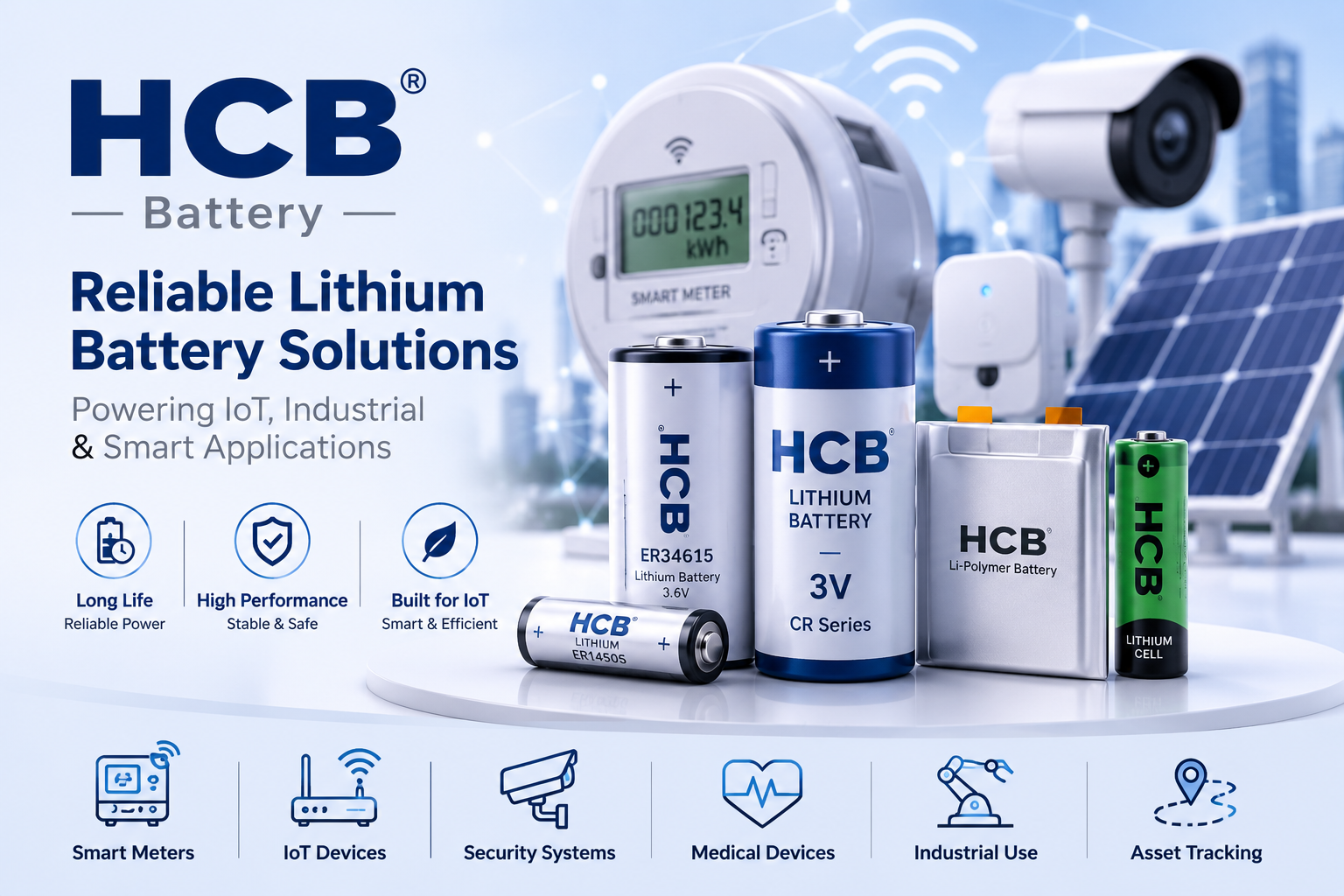
This is where HCB lithium battery solutions are becoming highly important. Advanced lithium batteries are now powering everything from smart meters and LoRa gateways to industrial sensors and IoT-enabled infrastructure systems.
In fast-growing technology cities like Jaipur, businesses and infrastructure providers are increasingly adopting IoT systems powered by high-performance lithium batteries for uninterrupted and energy-efficient operations.
This blog explains the importance of HCB lithium batteries, their applications, benefits, and why they are widely used in modern automation and IoT solutions.
What Is an HCB Lithium Battery?
An HCB lithium battery is a high-performance energy solution designed for industrial, IoT, and smart automation applications. These batteries are engineered to provide:
- Long operational life
- Stable voltage output
- Low self-discharge
- Wide temperature tolerance
- Reliable power for wireless devices
HCB batteries are commonly used in:
- Smart meters
- LoRa devices
- Asset tracking systems
- Smart city infrastructure
- Wireless sensor networks
- Industrial monitoring systems
According to HCB Battery Co., Ltd., their lithium battery products are widely used in smart meters, IoT devices, smart city systems, and industrial monitoring applications.
Why Lithium Batteries Are Important for IoT and LoRa Devices
Traditional batteries often fail to meet the power requirements of modern IoT systems. Smart sensors and LoRa devices require power solutions that can operate continuously for years with minimal maintenance.
Challenges in IoT Power Systems
IoT and wireless monitoring systems typically operate in:
- Remote locations
- Harsh industrial environments
- Outdoor smart city infrastructure
- Low-maintenance utility networks
This makes battery reliability extremely important.
Why HCB Lithium Batteries Stand Out
HCB lithium batteries are specifically designed for:
- Low-power IoT applications
- Long-term sensor deployment
- Industrial automation systems
- Smart metering infrastructure
How HCB Lithium Batteries Work in Smart Systems
A smart automation or IoT system usually consists of:
- Sensors
- Wireless communication modules
- Data transmission units
- Cloud monitoring platforms
The lithium battery powers these devices continuously while ensuring stable performance and reliable communication.
Typical Workflow
- Sensors collect environmental or operational data
- LoRa or wireless modules transmit data
- Cloud systems analyze the information
- The battery ensures uninterrupted operation
This process requires a battery solution capable of:
- Long standby life
- Stable voltage output
- Reliable pulse current support
HCB batteries are widely used for these requirements in smart monitoring systems.
Key Features of HCB Lithium Batteries
1. Long Battery Life
One of the biggest advantages of an HCB lithium battery is its extended operational lifespan.
Many IoT and LoRa devices are deployed in locations where battery replacement is difficult. HCB batteries are designed for long-term usage with minimal maintenance.
According to HCB specifications, many lithium battery models offer extremely low self-discharge rates and long storage life.
2. Wide Operating Temperature Range
Industrial and outdoor devices often operate in extreme temperatures.
HCB lithium batteries support operation in harsh conditions ranging from:
- High industrial heat
- Outdoor weather environments
- Cold temperature conditions
Some battery models operate efficiently from -55°C to +85°C.
3. Stable Voltage Performance
Stable voltage is essential for:
- LoRa communication
- Smart meters
- Wireless monitoring devices
Voltage instability can lead to communication failures or sensor downtime.
HCB batteries are designed to provide reliable and stable voltage output for industrial automation systems.
4. Low Power Consumption Support
LoRa and IoT systems are optimized for low energy usage. HCB lithium batteries complement these systems by delivering efficient low-current performance.
This is especially important for:
- Smart sensors
- AMR metering systems
- GPS tracking devices
- Wireless utility monitoring
5. Compact and Lightweight Design
Modern automation systems require compact power solutions.
HCB offers:
- Cylindrical batteries
- Pouch cells
- Li-polymer batteries
- Customized battery solutions
These compact designs are ideal for small embedded devices and wireless systems.
Popular HCB Lithium Battery Applications
1. Smart Metering Systems
One of the most common uses of HCB lithium batteries is in smart metering infrastructure.
Applications include:
- Water meters
- Gas meters
- Electricity meters
- Heat meters
HCB batteries are widely used in Automatic Meter Reading (AMR) systems.
2. LoRa Automation Systems
LoRa devices require batteries capable of:
- Long standby life
- Low energy usage
- Stable communication performance
HCB batteries are ideal for:
- LoRa gateways
- Sensor nodes
- Smart city systems
- Industrial automation
3. Smart City Infrastructure
Smart cities depend heavily on wireless monitoring systems.
HCB battery-powered applications include:
- Smart Street Light Controller systems
- Smart Parking Sensor System
- Traffic monitoring devices
- Environmental sensors
Cities like Jaipur are increasingly implementing such technologies.
4. Industrial IoT Monitoring
Industries use HCB batteries for:
- Asset tracking
- Machine monitoring
- Predictive maintenance
- Wireless industrial sensors
Reliable battery performance is critical for continuous industrial operations.
5. Medical & Security Systems
HCB batteries are also used in:
- Medical devices
- Smart security systems
- Alarm systems
- GPS tracking devices
These applications require high reliability and uninterrupted operation.
Role of SEHAJ SYNERGY TECHNOLOGIES in Battery Solutions
SEHAJ SYNERGY TECHNOLOGIES provides advanced IoT and automation products powered by reliable lithium battery technologies.
Their solutions support:
- Smart metering systems
- LoRa automation infrastructure
- Industrial monitoring devices
- Wireless sensor networks
- Smart city projects
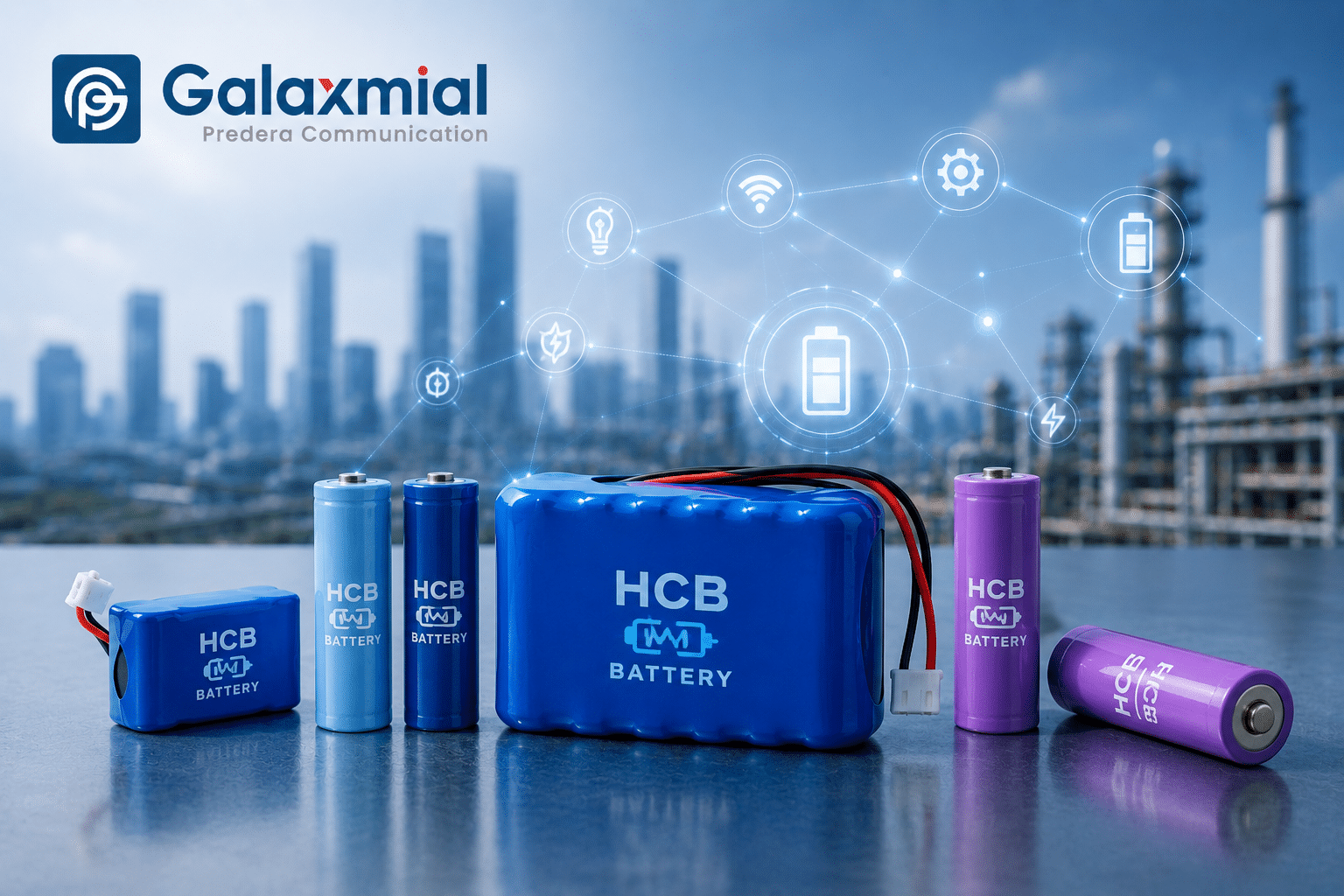
Businesses like Galaxmial Predera help distribute and integrate these advanced battery-powered solutions across Jaipur and India.
Why Jaipur Businesses Are Adopting Smart Battery Solutions
The demand for IoT and smart automation systems in Jaipur is increasing because of:
- Rapid urban development
- Smart city initiatives
- Industrial automation growth
- Utility monitoring requirements
This has increased the demand for:
- Battery for Wireless Sensors
- Smart metering batteries
- Long-life industrial power solutions
HCB lithium batteries are becoming an important part of this technological transition.
Advantages of Choosing Professional Battery Solutions
Using low-quality batteries in industrial systems can lead to:
- Sensor failures
- Communication loss
- Increased maintenance costs
- Reduced operational efficiency
Professional battery solutions ensure:
- Reliable system performance
- Long-term operational stability
- Better IoT network efficiency
- Lower maintenance requirements
Future of Lithium Battery Technology in India
India’s IoT and smart infrastructure market is expected to grow rapidly over the next decade.
Future battery innovations will focus on:
- Higher energy density
- Faster charging
- Longer operational life
- AI-based battery management
- Sustainable energy solutions
LoRa automation systems, smart metering infrastructure, and wireless sensor technologies will continue driving demand for advanced lithium batteries.
Why HCB Lithium Batteries Are Preferred for IoT Applications
Organizations prefer HCB batteries because they offer:
- Reliable long-term performance
- Wide industrial compatibility
- Strong temperature resistance
- Efficient low-power support
- Flexible product range
This makes them ideal for:
- IoT devices
- Smart sensors
- Wireless monitoring systems
- Industrial automation
Conclusion
The growth of IoT infrastructure, smart metering systems, and LoRa automation technologies in India has created a strong demand for reliable and long-lasting battery solutions. HCB lithium batteries provide the performance, stability, and efficiency needed for modern wireless monitoring and automation systems.
From smart city infrastructure and industrial IoT to smart meters and wireless sensors, these batteries play a critical role in enabling uninterrupted and energy-efficient operations.
Companies like SEHAJ SYNERGY TECHNOLOGIES and Galaxmial Predera are helping businesses adopt advanced battery-powered IoT solutions across Jaipur and India.
As automation technologies continue evolving, investing in high-quality lithium battery systems will become even more important for long-term infrastructure reliability and smart technology growth.
FAQs
1. What is an HCB lithium battery?
An HCB lithium battery is a high-performance battery solution designed for IoT, smart metering, and industrial automation applications.
2. Where are HCB lithium batteries used?
They are used in smart meters, LoRa devices, IoT sensors, industrial monitoring systems, and smart city infrastructure.
3. Why are lithium batteries important for IoT devices?
Lithium batteries provide long operational life, stable voltage, and low power consumption for wireless devices.
4. What are the benefits of HCB lithium batteries?
Benefits include long battery life, stable performance, low self-discharge, and wide operating temperature support.
5. Are HCB batteries suitable for smart city projects?
Yes, they are widely used in smart street lighting, smart parking systems, and utility monitoring infrastructure.
6. Who provides HCB battery-powered IoT solutions in India?
SEHAJ SYNERGY TECHNOLOGIES and Galaxmial Predera provide IoT and automation solutions powered by advanced lithium battery systems.