If your smartphone has a cracked screen, weak battery, charging problem, damaged camera, water…
Read More

HCB lithium battery
How to Choose the Right Lithium Battery for Industrial Applications
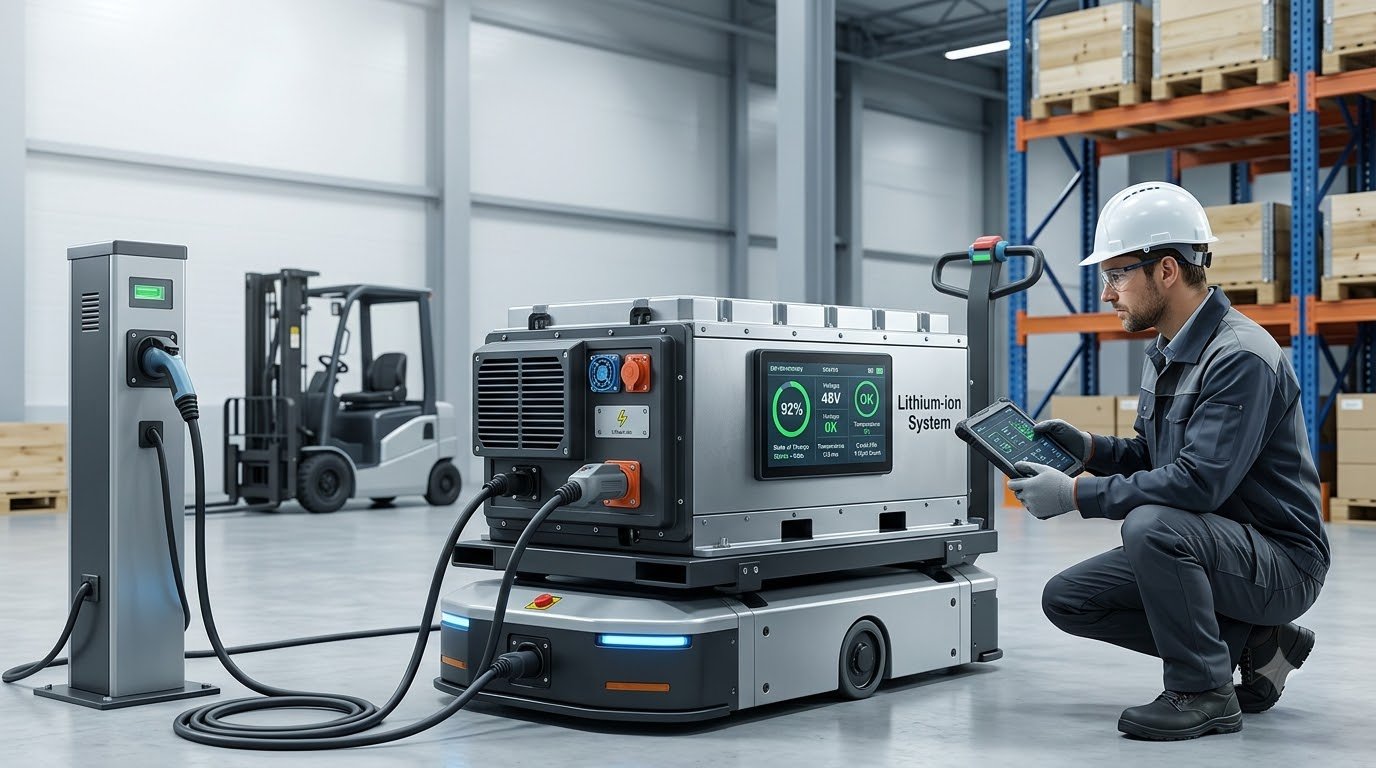
Lithium batteries are increasingly used in factories, warehouses, renewable energy systems, industrial vehicles, backup power systems, and material-handling equipment. Their combination of energy storage, power delivery, and relatively low routine maintenance makes them an important option for many industrial applications.
However, choosing an industrial lithium battery is not simply a matter of selecting the battery with the largest capacity or lowest purchase price. The correct choice depends on several factors, including voltage, capacity, power requirements, battery chemistry, cycle life, operating temperature, charging requirements, safety features, and compatibility with the equipment.
Choosing the wrong battery can result in insufficient runtime, poor performance, charging problems, unnecessary downtime, or increased long-term costs.
This guide explains how to choose the right lithium battery for industrial applications and what businesses should consider before purchasing an industrial battery system.
What Is an Industrial Lithium Battery?
An industrial lithium battery is a rechargeable battery system designed to provide electrical energy for demanding equipment and applications. Unlike small lithium batteries used in phones or consumer electronics, industrial battery systems are generally designed around specific voltage, power, capacity, environmental, and operational requirements.
An industrial lithium-ion battery system can contain several components, including:
- Individual battery cells
- Battery modules
- Battery packs
- Battery Management System (BMS)
- Electrical protection components
- Connectors and wiring
- Charging equipment
- Monitoring or communication systems
The Battery Management System is particularly important because it monitors battery conditions and can provide protection against situations such as overcharging, over-discharge, excessive current, and abnormal temperatures.
Industrial batteries may be used in forklifts, automated guided vehicles, backup power systems, renewable energy storage, industrial machinery, and electric vehicles.
Why Choosing the Right Lithium Battery Matters
Battery selection directly affects how industrial equipment operates.
An unsuitable battery may provide enough energy capacity on paper but still fail to deliver the required power during high-load operation. Similarly, a battery may physically fit inside equipment but be incompatible with its charger or electrical control system.
Proper industrial battery selection can help businesses manage:
- Equipment performance
- Operating runtime
- Charging requirements
- Productivity
- Battery lifespan
- Energy consumption
- Maintenance requirements
- Safety
- Long-term operating costs
The objective should be to match the battery to the actual duty cycle and operating environment rather than selecting a battery based on a single specification.
How to Choose the Right Lithium Battery for Industrial Applications
Several specifications should be evaluated before selecting an industrial lithium battery. The following factors provide a practical lithium battery selection guide.
1. Check the Battery Voltage
Voltage is one of the first specifications to check.
Battery voltage must be compatible with the equipment’s electrical system. Industrial equipment may be designed around different voltage levels depending on its size, motor, controller, and intended application.
Before purchasing a battery, check the equipment manufacturer’s specifications for:
- Required nominal voltage
- Acceptable voltage range
- Maximum voltage
- Minimum operating voltage
- Charger requirements
Using an incompatible voltage can cause equipment malfunction or create safety and electrical problems.
Do not assume that two batteries are interchangeable simply because they look similar or have similar capacities.
2. Determine the Required Battery Capacity
Battery capacity indicates how much electrical energy a battery can store and is commonly expressed using amp-hours (Ah) or kilowatt-hours (kWh).
Amp-hours describe electrical charge capacity, while watt-hours and kilowatt-hours describe energy.
A simplified relationship is:
Energy (Wh) = Voltage (V) × Capacity (Ah)
For example, a 48 V battery rated at 100 Ah has a nominal energy capacity of approximately:
48 × 100 = 4,800 Wh
or:
4.8 kWh
Actual usable energy can be lower because of operating limits, efficiency losses, temperature, battery management settings, and recommended depth of discharge.
When selecting lithium battery capacity, consider:
- Required operating hours
- Average equipment load
- Peak loads
- Charging opportunities
- Recommended depth of discharge
- Environmental conditions
- Battery efficiency
Higher capacity generally means more stored energy, but it can also increase battery size, weight, and cost.
3. Understand Power Requirements
Energy capacity and power output are not the same thing.
Capacity determines how much energy a battery can store, while power determines how quickly the battery can deliver that energy.
Industrial equipment with electric motors may require substantial power during acceleration, lifting, starting, or other high-load situations.
Consider:
- Continuous power requirements
- Peak power requirements
- Starting current
- Motor loads
- Acceleration demands
- Temporary high-load events
A battery may have adequate kWh capacity but still be unsuitable if its maximum continuous or peak output is insufficient.
This is why industrial battery selection should consider both energy requirements and power requirements.
4. Choose the Appropriate Battery Chemistry
Lithium batteries are available in different chemistries, and each has different characteristics.
Two commonly encountered lithium-ion chemistries in industrial applications include:
Lithium Iron Phosphate (LiFePO4 or LFP)
LFP batteries are commonly considered where factors such as thermal stability, durability, and cycle performance are important.
General characteristics include:
- Good thermal stability
- Good cycle-life potential
- Lower energy density than some other lithium chemistries
- Suitability for many stationary and industrial applications
Nickel Manganese Cobalt (NMC)
NMC batteries are known for relatively high energy density and can be useful where weight and available space are important considerations.
General characteristics include:
- High energy density
- Compact design potential
- Suitable for applications where weight and space are important
- Different thermal and operating characteristics from LFP
Neither chemistry is universally appropriate for every industrial application. The selection should be based on the equipment, duty cycle, environmental conditions, required energy density, safety requirements, and manufacturer’s specifications.
5. Evaluate Cycle Life
Cycle life refers to the number of charge and discharge cycles a battery can complete while maintaining its performance within a specified condition.
This is especially important for industrial equipment that operates frequently.
Battery cycle life can be affected by:
- Depth of discharge
- Operating temperature
- Charging practices
- Discharge rate
- Load conditions
- Battery chemistry
- Battery management settings
When comparing products, do not look at cycle-life numbers without checking how the manufacturer defines a cycle and the capacity-retention conditions associated with that figure.
6. Consider Depth of Discharge
Depth of Discharge, commonly called DoD, describes how much of a battery’s available capacity has been used.
For example, using approximately 70% of a battery’s available energy represents roughly 70% depth of discharge.
Repeatedly operating a battery near its extreme discharge limits can affect long-term battery performance depending on the battery design and manufacturer’s recommendations.
Therefore, battery sizing should account for the expected operating range rather than assuming the entire nominal capacity will always be available for unrestricted use.
7. Check the Battery Management System
A Battery Management System (BMS) is a critical part of a modern industrial lithium battery.
Depending on the design, a BMS can monitor and manage:
- Individual cell voltages
- Battery voltage
- Battery temperature
- Charging conditions
- Discharging conditions
- Current levels
- Cell balancing
- Overcharge protection
- Over-discharge protection
- Overcurrent protection
- Fault conditions
For industrial applications, BMS compatibility is particularly important.
Some equipment may also communicate with the battery through electronic interfaces. Therefore, a battery with the correct voltage may still be unsuitable if its communication system or BMS integration does not match the equipment.
8. Understand Lithium Battery Charging Requirements
Charging requirements should be confirmed before purchasing an industrial lithium battery.
Check:
- Required charging voltage
- Recommended charging current
- Compatible charger
- Charging time
- Charging temperature range
- Fast-charging capability
- Opportunity-charging requirements
- Charger communication requirements
Always use charging equipment that is approved or specified for the battery system.
Using an incompatible charger can create performance and safety problems.
For high-utilization equipment, charging strategy can also affect productivity. Some operations may benefit from scheduled charging, while others may require opportunity charging during planned breaks.
9. Check the Operating Temperature Range
Temperature can significantly influence lithium battery performance and service life.
Industrial facilities may expose batteries to:
- High temperatures
- Low temperatures
- Outdoor weather
- Cold-storage environments
- Rapid temperature changes
Cold conditions can affect charging and battery performance, while excessive heat can accelerate battery degradation and increase thermal-management requirements.
Before purchasing, verify:
- Operating temperature range
- Charging temperature range
- Storage temperature range
- Temperature monitoring features
- Heating or cooling requirements
The battery’s published specifications should always be checked for the specific environmental conditions involved.
10. Consider Physical Size and Weight
A battery must physically fit the equipment.
Important considerations include:
- Battery compartment dimensions
- Battery weight
- Mounting method
- Connector location
- Clearance
- Equipment weight limitations
- Cable routing
- Ventilation or enclosure requirements
For mobile equipment, battery weight can also influence overall vehicle performance and load distribution.
Always verify the complete battery dimensions and installation requirements rather than relying only on nominal capacity.
11. Evaluate Environmental Conditions
Industrial environments can be significantly more demanding than normal indoor environments.
Consider whether the battery will operate in:
- Dusty factories
- Humid locations
- Outdoor facilities
- Cold-storage areas
- High-temperature environments
- High-vibration applications
Check the manufacturer’s environmental specifications and enclosure ratings where applicable.
The battery should be selected for the actual environment rather than an assumed indoor operating condition.
12. Review Battery Safety Features
Safety should be a major consideration when selecting industrial battery systems.
Important features and considerations can include:
- Battery Management System protection
- Temperature monitoring
- Overcurrent protection
- Short-circuit protection
- Appropriate enclosure
- Proper electrical protection
- Compatible charging equipment
- Manufacturer-approved components
- Applicable certifications and testing documentation
Industrial lithium batteries can contain substantial stored electrical energy. Installation, charging, and maintenance should therefore follow manufacturer instructions and applicable workplace and electrical safety requirements.
Users should not attempt to bypass the BMS, modify battery protection systems, or rebuild high-power lithium battery packs without appropriate professional expertise and procedures.
Match the Battery to the Industrial Application
Different applications have different battery requirements. A battery designed for one type of equipment may not be appropriate for another.
Material Handling Equipment
Forklifts, pallet trucks, reach trucks, and automated guided vehicles can require frequent cycling and high power.
Important considerations include:
- Runtime
- Peak power
- Charging frequency
- Cycle life
- Battery dimensions
- Opportunity charging
- Operating environment
Industrial Energy Storage
Industrial energy storage systems generally require careful consideration of both energy and power.
Important factors include:
- Total energy capacity
- Charge and discharge power
- Daily cycling
- Thermal management
- System integration
- Monitoring
- Safety systems
Backup Power Systems
For backup applications, the battery should be sized around the required backup duration and connected loads.
Consider:
- Critical load
- Peak load
- Required backup time
- Recharge time
- Standby conditions
- System reliability
Renewable Energy Systems
Solar and other renewable energy systems often involve repeated charging and discharging.
Battery selection should consider:
- Daily energy consumption
- Solar generation
- Storage capacity
- Charge/discharge limits
- Cycle requirements
- System efficiency
- Environmental conditions
Industrial Electric Vehicles
Industrial electric vehicles may require a combination of high energy capacity and high power output.
Consider:
- Required range or operating time
- Vehicle weight
- Motor power
- Acceleration requirements
- Charging infrastructure
- Operating temperature
- Battery compartment
Lithium Battery vs Lead-Acid Battery for Industrial Applications
Both lithium and lead-acid batteries can be used in industrial environments. The appropriate choice depends on the application, operating pattern, infrastructure, and financial requirements.
| Feature | Lithium Battery | Lead-Acid Battery |
|---|---|---|
| Energy efficiency | Generally high, depending on system design | Generally lower, depending on battery type and operating conditions |
| Charging time | Often supports relatively faster charging, depending on system | Typically requires longer charging periods |
| Cycle life | Often offers substantial cycle-life potential | Cycle life varies and can be lower under demanding duty cycles |
| Maintenance | Generally requires less routine maintenance | May require more maintenance depending on battery type |
| Weight | Often lighter for comparable usable energy | Generally heavier for comparable energy |
| Initial cost | Often higher | Often lower |
| Long-term cost | Depends on lifespan, energy use, charging and maintenance | Depends on purchase cost, lifespan, maintenance and energy use |
| Space requirements | Can offer high energy density | Generally requires more space for equivalent energy |
| Typical applications | Material handling, energy storage, electric vehicles and backup systems | Backup power, material handling and various industrial systems |
These are general characteristics rather than universal rules. Actual performance depends on battery design, application, operating conditions, maintenance, charging practices, and manufacturer specifications.
How to Calculate the Battery Capacity You Need
A simple starting point for battery sizing is:
Power × Operating Time = Energy Requirement
For example, suppose equipment consumes an average of 5 kW and needs to operate for 4 hours.
The basic energy requirement would be:
5 kW × 4 hours = 20 kWh
This does not necessarily mean that a 20 kWh battery is automatically sufficient.
Real-world sizing should account for:
- Battery efficiency
- Equipment efficiency
- Recommended depth of discharge
- Peak loads
- Temperature
- Aging
- Charging losses
- Required reserve capacity
- Manufacturer specifications
For example, if the equipment has significant startup loads, the battery must also be capable of delivering the required peak power.
For an accurate industrial battery sizing decision, the equipment’s actual load profile should be evaluated rather than relying only on average power.
Understand Total Cost of Ownership
The cheapest battery to purchase is not necessarily the least expensive option over its operating life.
Total Cost of Ownership (TCO) considers the broader costs associated with using a battery.
These can include:
- Initial battery purchase
- Charger cost
- Installation
- Electrical infrastructure
- Energy consumption
- Maintenance
- Replacement frequency
- Downtime
- Productivity losses
- Disposal or recycling
For example, a battery with a higher initial price may have different operating costs, charging requirements, or service life than a lower-priced alternative.
Businesses should therefore compare the expected cost over the intended operating period rather than looking only at the purchase price.
Check Battery Compatibility and Integration
Compatibility involves more than matching voltage.
Before purchasing, verify compatibility with:
- Industrial equipment
- Charger
- Connectors
- Electrical controls
- BMS communication
- Monitoring systems
- Control systems
- Existing electrical infrastructure
A battery that has the correct nominal voltage may still be incompatible with the equipment’s charging system or communication requirements.
Ask the battery supplier for complete technical documentation before installation.
Questions to Ask Before Buying an Industrial Lithium Battery
Use this checklist when evaluating an industrial battery:
- What voltage does my equipment require?
- How much energy capacity do I need?
- What is the maximum continuous load?
- What is the peak load?
- How many operating hours are required?
- How frequently will the battery be charged?
- What operating temperature range is expected?
- Which battery chemistry is appropriate?
- What cycle life is specified?
- What depth of discharge is recommended?
- Is the BMS compatible with the equipment?
- What charger is required?
- What safety certifications or testing documentation are available?
- What warranty is provided?
- What are the installation requirements?
- What is the expected total cost of ownership?
- What technical support is available?
Common Mistakes When Choosing an Industrial Lithium Battery
Several common mistakes can result in poor battery performance or unnecessary costs.
Choosing Based Only on Price
A low purchase price does not necessarily mean a low total cost of ownership.
Choosing the Highest Capacity
More capacity is not automatically better. Excess capacity can increase cost, weight, and physical size.
Ignoring Peak Power
A battery must be able to handle the equipment’s required power, not just its average energy consumption.
Ignoring Temperature
Operating conditions can significantly affect battery performance and charging.
Using an Incompatible Charger
The charger should be compatible with the battery’s electrical and control requirements.
Ignoring BMS Compatibility
Electronic communication and protection systems can be important for integrated industrial equipment.
Not Checking Physical Dimensions
A battery may have suitable electrical specifications but still fail to fit the equipment.
Ignoring Warranty Terms
Check what the warranty covers, its duration, operating conditions, and any capacity-retention requirements.
Focusing Only on Cycle-Life Numbers
Cycle-life claims should be evaluated alongside the conditions under which those cycles were measured.
Failing to Consider Total Cost of Ownership
Purchase price is only one part of the long-term cost.
Buying From an Unreliable Supplier
Technical documentation, warranty support, safety information, and after-sales service are important when purchasing industrial battery systems.
How to Choose a Reliable Battery Supplier
A reliable supplier should be able to provide clear technical information rather than relying only on marketing claims.
Before purchasing, ask for:
- Product datasheets
- Electrical specifications
- Charging requirements
- Operating temperature information
- Warranty documentation
- Safety documentation
- Relevant certification information
- Testing information
- Installation instructions
- Maintenance guidance
- BMS information
- Technical support details
- Replacement and service information
Where certifications or regulatory compliance are important, verify the documentation and confirm that it applies to the exact battery model and intended application.
Safety and Professional Installation
Industrial lithium batteries can contain significant electrical energy and should be installed and operated according to manufacturer instructions and applicable safety requirements.
Depending on the system, professional installation may be appropriate or required.
Important practices include:
- Use the correct charger
- Use compatible electrical protection
- Follow installation instructions
- Use manufacturer-approved components
- Inspect equipment regularly
- Follow workplace safety procedures
- Follow applicable local regulations
- Keep technical documentation available
Do not open damaged battery packs, bypass protective electronics, modify the BMS, or attempt high-power lithium battery repairs without qualified personnel and appropriate procedures.
Industrial Lithium Battery Maintenance Tips
Lithium batteries generally require less routine maintenance than some traditional battery technologies, but they still need proper monitoring and care.
Useful maintenance practices include:
- Follow the manufacturer’s charging instructions
- Keep electrical connections clean and secure
- Monitor unusual temperature changes
- Check for physical damage
- Monitor battery performance
- Review BMS warnings and fault information
- Keep applicable firmware or monitoring systems updated
- Follow recommended storage conditions
- Schedule professional inspection when required
Good operating practices can help identify problems before they result in unexpected equipment downtime.
Signs That an Industrial Battery May Need Inspection or Replacement
A battery may require professional inspection when users notice:
- Unexpectedly short runtime
- Significant loss of usable capacity
- Excessive heating
- Swelling or physical deformation
- Repeated BMS faults
- Charging problems
- Unexpected equipment shutdowns
- Unusual smells
- Visible physical damage
- Repeated performance problems
A damaged, swollen, overheated, or otherwise abnormal lithium battery should not be opened or repaired by unqualified personnel.
Frequently Asked Questions
1. What Is the Best Lithium Battery for Industrial Applications?
There is no single lithium battery that is appropriate for every industrial application. Selection depends on voltage, capacity, power requirements, chemistry, cycle life, temperature, physical constraints, charging requirements, and system compatibility.
2. How Do I Calculate the Lithium Battery Capacity I Need?
Start by estimating the equipment’s power consumption and required operating time. The basic relationship is Power × Time = Energy. Then account for efficiency, depth of discharge, peak loads, temperature, aging, and manufacturer recommendations.
3. Is LiFePO4 Suitable for Industrial Applications?
LiFePO4, or LFP, can be suitable for many industrial applications. Its characteristics, including thermal stability and cycle-life potential, can make it useful in applications where these factors are important. Suitability still depends on the specific system requirements.
4. How Long Do Industrial Lithium Batteries Last?
Battery lifespan varies significantly depending on chemistry, design, depth of discharge, temperature, charging practices, load, and usage frequency. Manufacturer specifications should be reviewed under conditions similar to the intended application.
5. What Is the Difference Between Ah and kWh?
Ah measures electrical charge capacity, while kWh measures energy. A simplified relationship is Wh = V × Ah. Therefore, voltage must be considered when converting Ah into an energy value.
6. Can I Use Any Charger With a Lithium Battery?
No. The charger must be compatible with the battery’s voltage, charging requirements, communication system where applicable, and manufacturer specifications.
7. What Factors Affect Industrial Lithium Battery Life?
Important factors include depth of discharge, temperature, charging practices, discharge rate, load conditions, battery chemistry, storage conditions, and overall operating environment.
8. Are Lithium Batteries Better Than Lead-Acid Batteries?
The appropriate technology depends on the application. Lithium and lead-acid batteries have different characteristics involving efficiency, charging, weight, maintenance, initial cost, cycle life, and operating requirements.
9. How Important Is the Battery Management System?
The BMS is an important part of a lithium battery system. Depending on the design, it can monitor voltage, temperature, current, cell balance, and protection conditions while communicating battery status to connected equipment.
10. When Should an Industrial Lithium Battery Be Replaced?
Replacement may need to be considered when the battery has significant capacity loss, repeated faults, charging problems, physical damage, abnormal heating, or no longer meets the application’s performance requirements.
Final Checklist: Choosing an Industrial Lithium Battery
Before choosing an industrial lithium battery, check all of the following:
- Voltage
- Capacity
- Power requirements
- Battery chemistry
- Cycle life
- Depth of discharge
- Battery Management System
- Charging requirements
- Operating temperature
- Physical dimensions
- Battery weight
- Environmental conditions
- Safety features
- Equipment compatibility
- Charger compatibility
- Warranty
- Supplier support
- Total Cost of Ownership
Final Thoughts
Choosing the right lithium battery for industrial applications requires more than comparing capacity or purchase price. The battery should be evaluated according to the equipment’s electrical requirements, operating schedule, power demand, environmental conditions, charging infrastructure, safety requirements, and expected service life.
A suitable industrial battery should provide the required voltage and power, enough usable energy for the intended operating period, appropriate protection through its BMS, compatible charging, and physical and environmental compatibility with the equipment.
Businesses should also look beyond the initial purchase price and consider total cost of ownership, technical support, warranty, maintenance, and replacement requirements.
Before making a purchase, review the manufacturer’s technical documentation and consult qualified professionals when required. Careful battery selection can help businesses make informed decisions about performance, reliability, safety, and long-term operating costs.

Mobile Repairing Shop

Uncategorized
Not every smartphone problem means you need to visit a repair shop. Many common…
Read More

Mobile problems
A mobile signal problem can make everyday phone use frustrating. Weak signal may cause…
Read More